Turning Raw Transcripts into Actionable Meeting Notes
Introduction
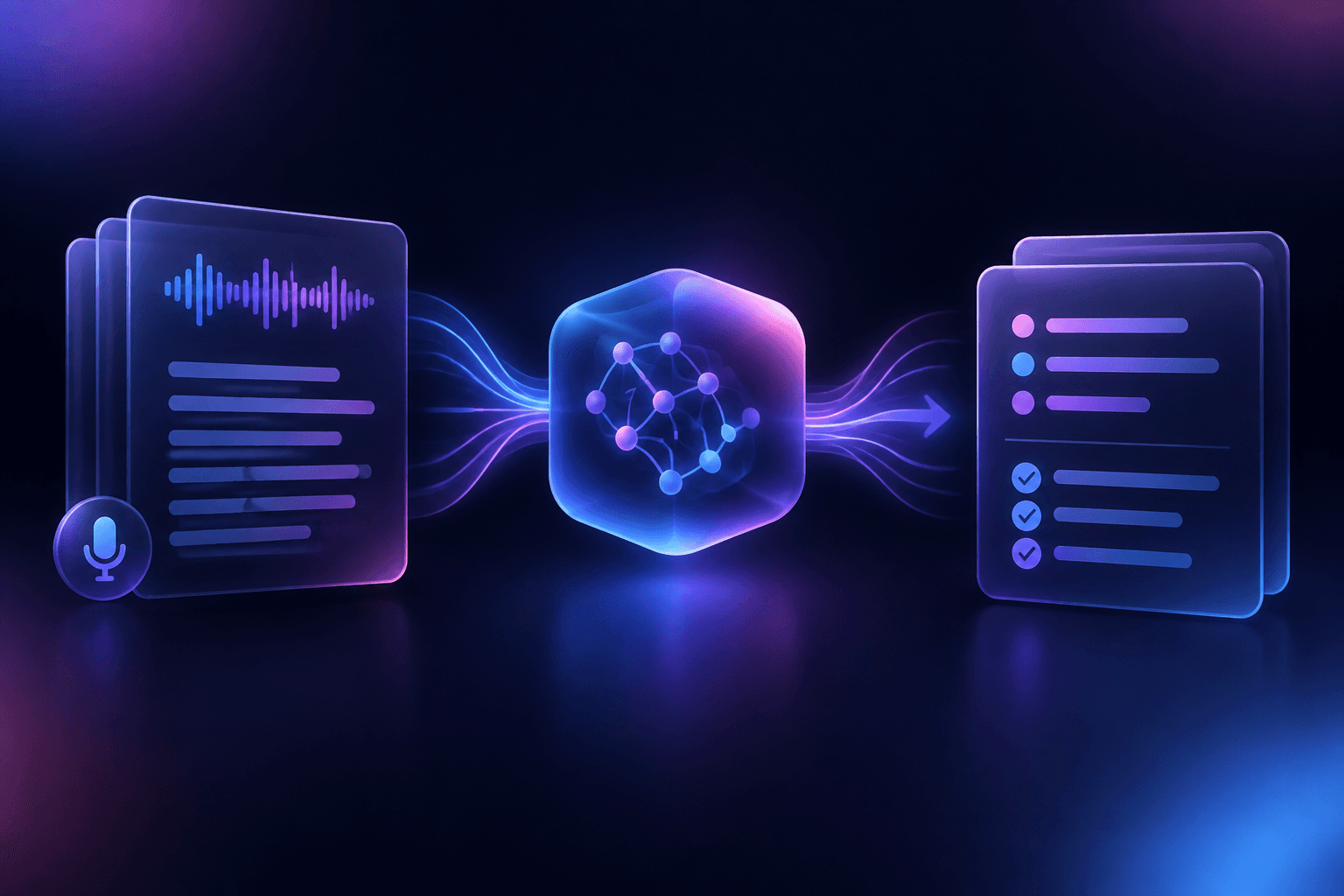
Meeting notes often become a daunting task, especially when you’re sorting through a pile of recorded transcript data. I’ve developed a streamlined workflow to transform raw transcripts into actionable summaries that include decisions and assigned owners, all in just a few minutes. Here’s how I do it.
Step 1: Recording the Meeting
I start with a reliable meeting recording tool. In my experience, a platform that integrates seamlessly with your calendar makes it easier to manage schedules and recordings. Ensure all participants are aware of the recording to maintain transparency. I use an AI transcription service to automatically generate the meeting transcript, focusing on clarity and accuracy.
Step 2: Cleaning Up the Transcript
Once I have the transcript, I quickly skim through it to identify any significant errors or unclear sections. Most AI transcription tools are impressively accurate, but I still check for nuances in conversations that might not be captured perfectly. I use tools like Google Docs or Notion for this, where I can make quick edits without delving into complex software.
Step 3: Utilizing AI for Summarization
Next, I apply AI-driven tools for summarization. I typically use services that reshape the raw data into a concise format. The goal is to extract key points, decisions made, and actions assigned to specific individuals. I experiment with different summarization tools because each service offers varying degrees of detail and style. Recently, I found that some AI tools outperform others in maintaining context while condensing information.
Step 4: Structuring Notes for Clarity
I usually structure the notes into categories: Key Decisions, Action Items, and Responsibility Assignments. Each section clearly highlights what was decided during the meeting, what actions are required, and who is accountable for those tasks. This structure means participants can quickly identify their roles without sifting through extensive text.
Step 5: Sharing the Notes
After finalizing the notes, I share them with all meeting attendees and any other stakeholders who need the information. It’s critical to communicate that these notes aren’t just for record-keeping; they’re actionable items that drive accountability. I often use Slack or email, depending on the group’s preference.
Practical Takeaway
By employing a combination of AI tools and strategic formatting, I can transform lengthy meeting transcripts into concise summaries complete with decisions and accountability. This not only saves time but also clarifies responsibilities, ensuring that everyone is aligned on next steps. Look into combining these tools for your own meeting note process, it’s been a game-changer for my workflow.